Before I moved to this neighborhood, I knew exactly two things about Montparnasse:
(1) that it has what some consider to be the ugliest building in Paris, the Montparnasse Tower, which caused nearly as much of an uproar when it was built as the Eiffel Tower did (which was described back in the day as “this belfry skeleton” by poet Paul Verlaine, “this truly tragic street lamp” by writer Léon Bloy, and “this mast of iron gymnasium apparatus” by writer François Coppée), and though the Eiffel’s reputation seems to have improved somewhat since then, the Montparnasse Tower’s has not (last year Architectural Digest ran a story on it titled “Paris’s Only Skyscraper Turns 50–And the French Still Hate It“).
(2) that it has a rather large train station, the Gare Montparnasse, which happens to be located right next to the Tower. Dwain and I passed through there on the way from Toulouse to our vacation rental in Paris, which, if I remember correctly, ended up being just downstairs from David Sedaris’s apartment near Odéon where he struggled to learn French in “Me Talk Pretty One Day.”

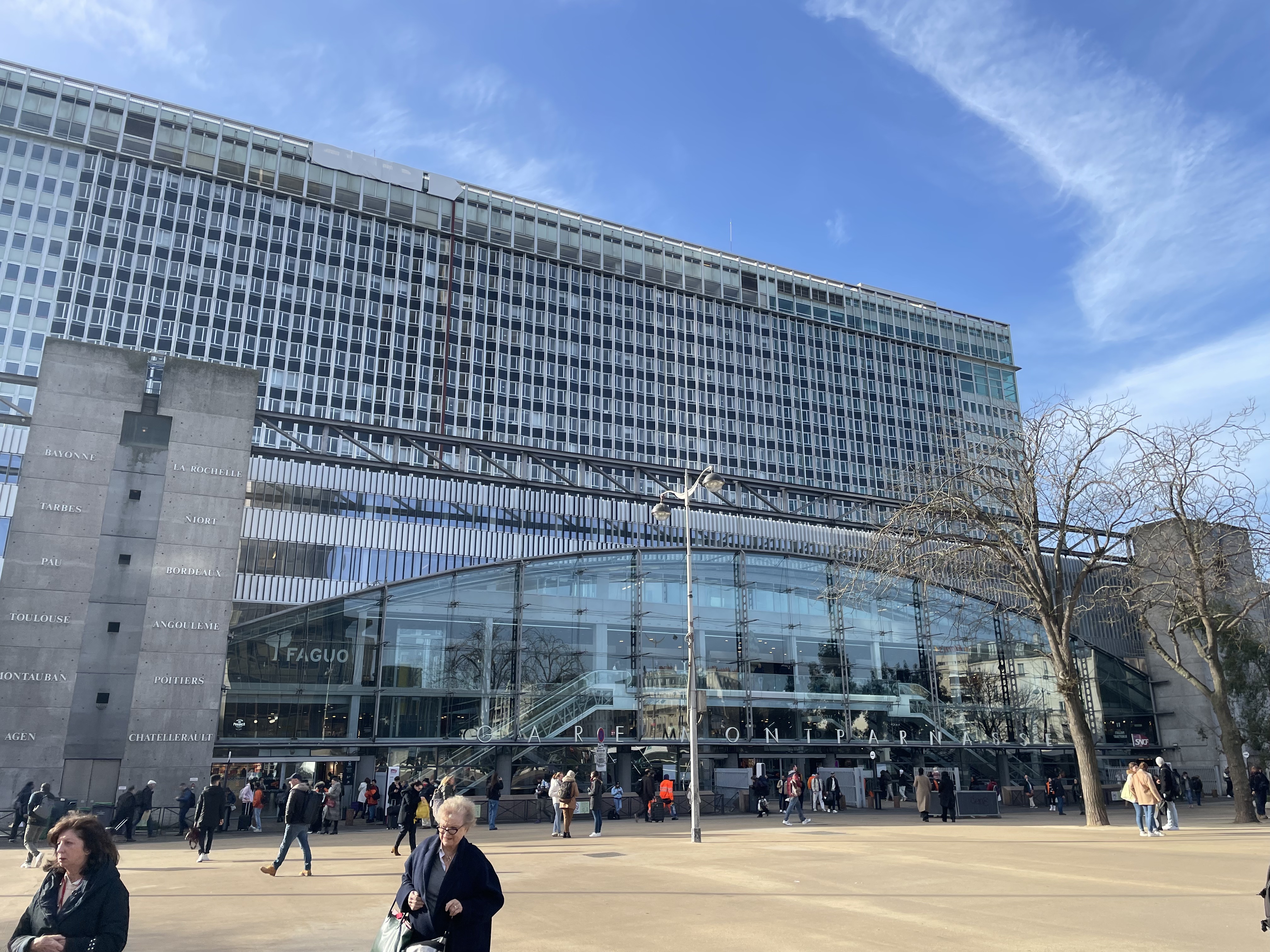
Montparnasse is what I think the French would call a “quartier populaire” — a neighborhood of the people — definitely not one of the chic quarters, but it’s not without its charms.
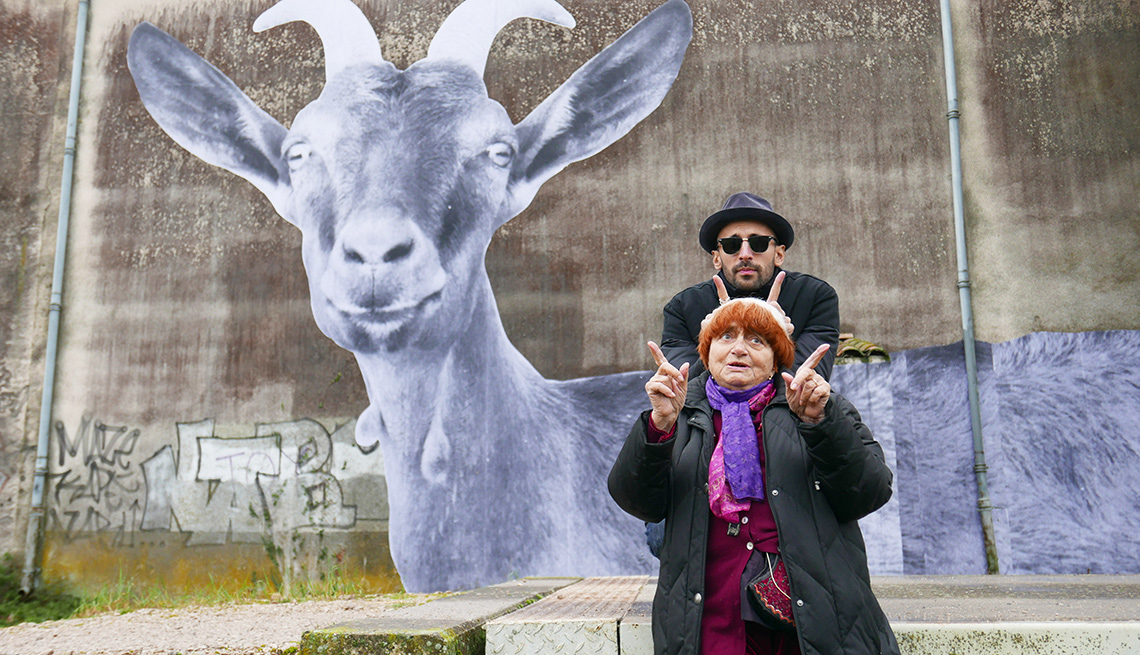
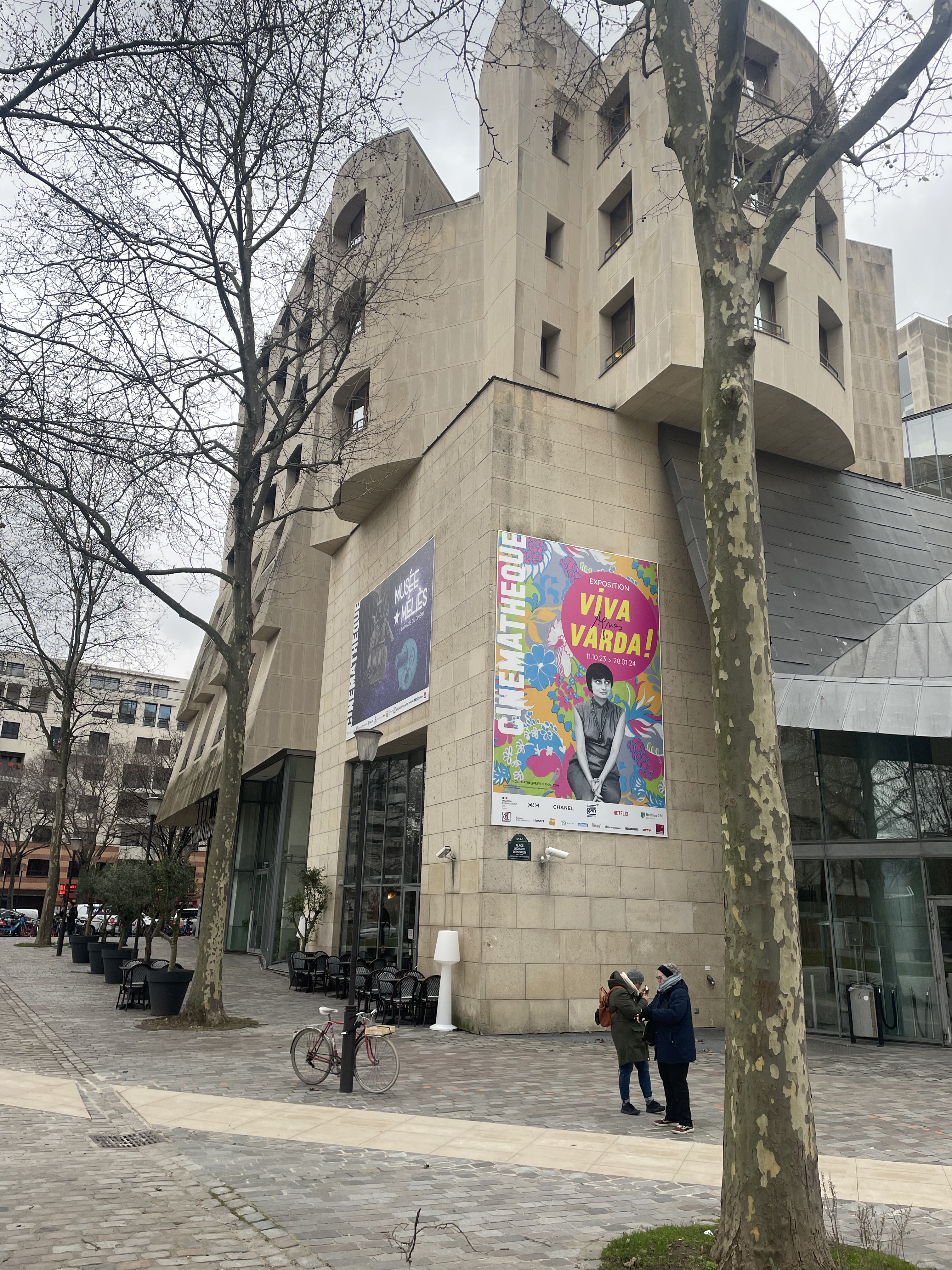
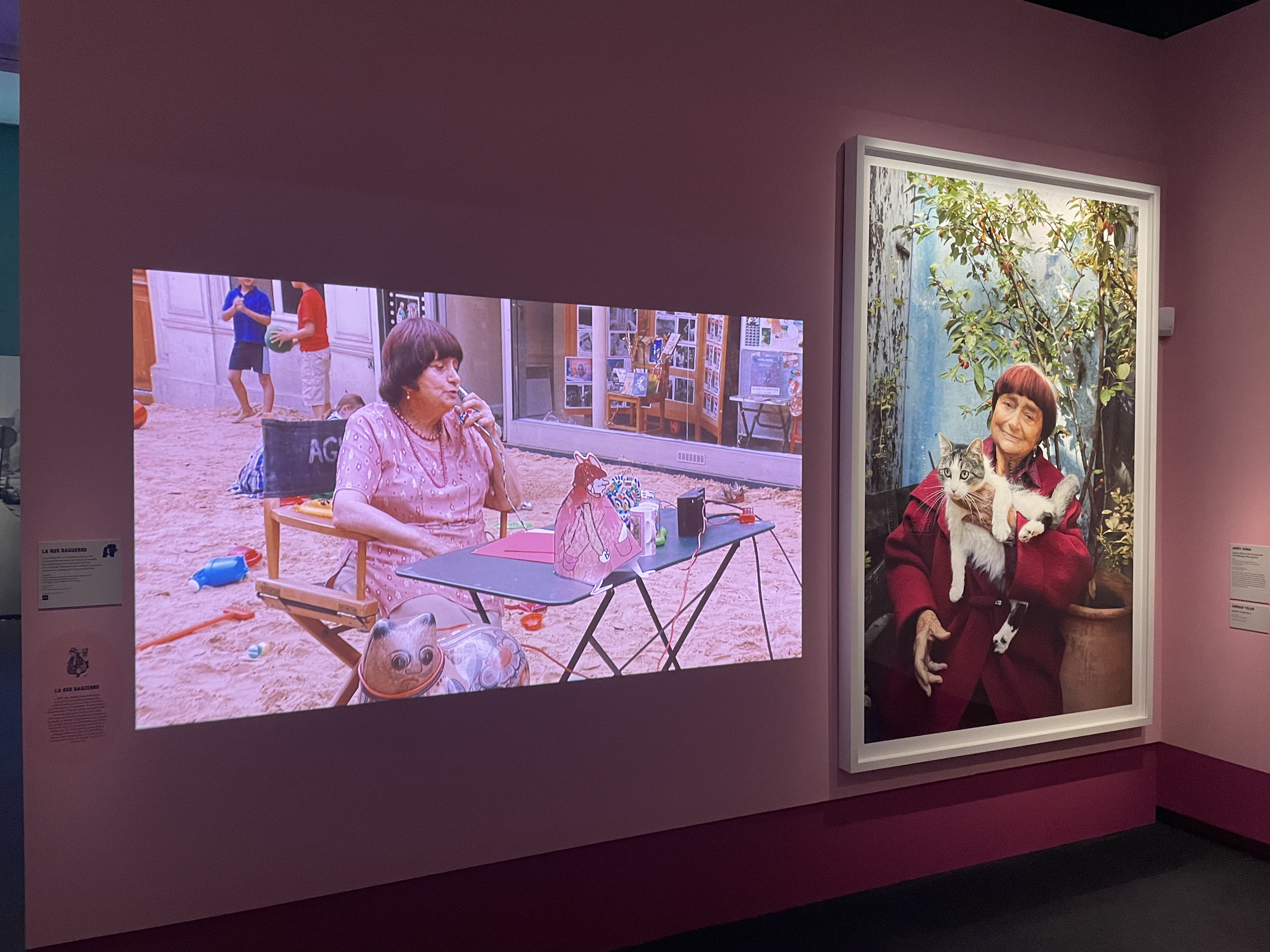
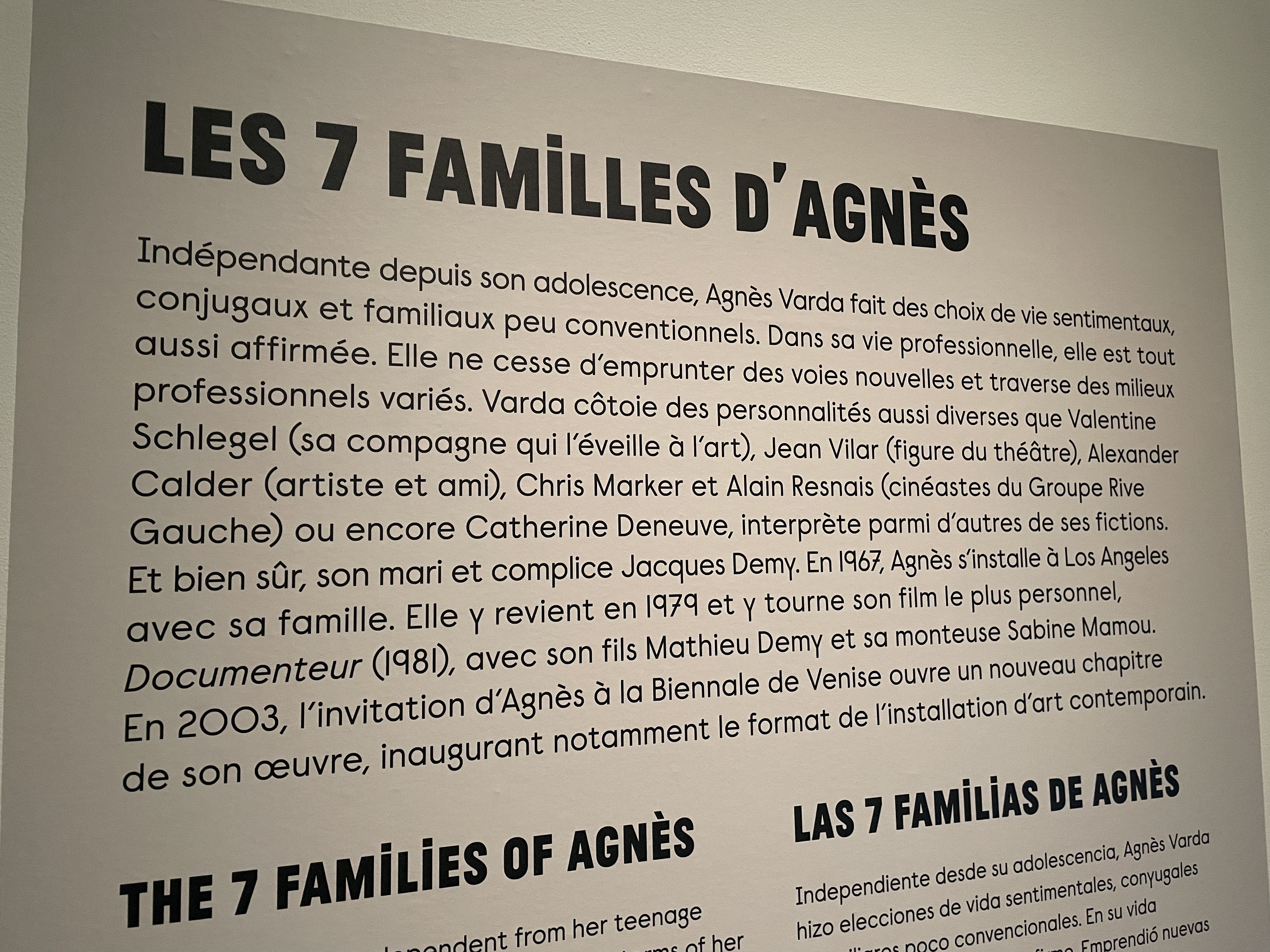
For a couple months, Dani and I had planned to check out the Agnes Varda exhibition at the Cinémathèque Française. I had first become enamored of Varda after watching what turned out to be her last film “Faces Places” (“Visages Villages” in French). She had such a playful quality, a sense of humor, and came across as also deeply caring. It turns out she lived for most of her life just a few blocks from my apartment on the Rue Daguerre. I mean, look at her at almost ninety years old…
Anticipating our visit, I streamed a couple of her films — “The Gleaners and I” (“Les Glaneurs (et la Glaneuse)” in French, because she considered herself a gleaner) and “Cleo from 5 to 7” (“Cléo de 5 à 7″ in French). She really anticipated the French New Wave of cinematography and more well-known directors like Jean-Luc Godard.
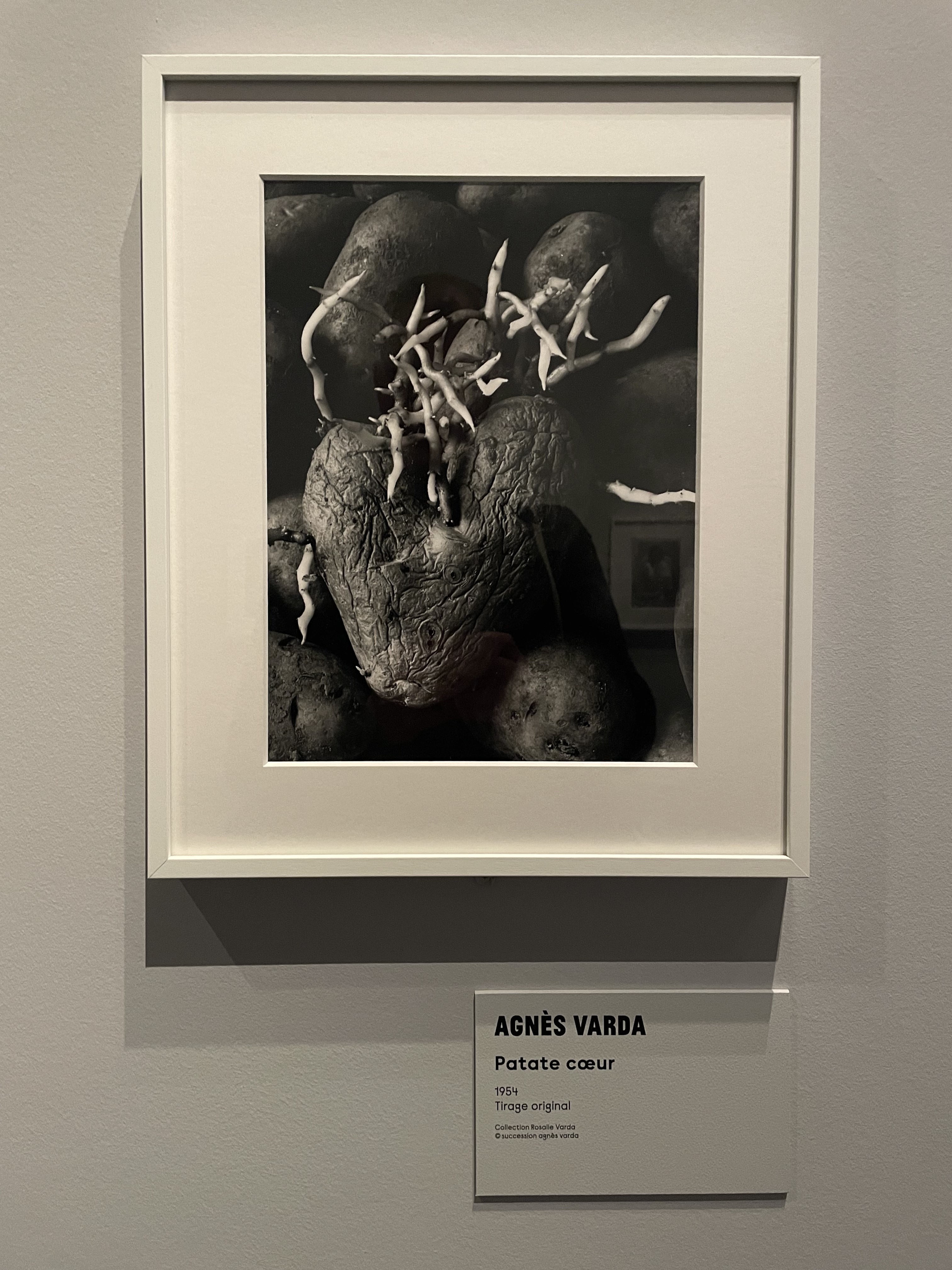
So it was fascinating to learn more about her and her work. She in particular loved (a) cats, and (b) heart-shaped potatoes. Never seen a heart-shaped potato? I hadn’t either. That’s because they’re systematically plucked out and tossed in rubbish heaps, so you’ll never see one in a store even though they’re perfectly edible.
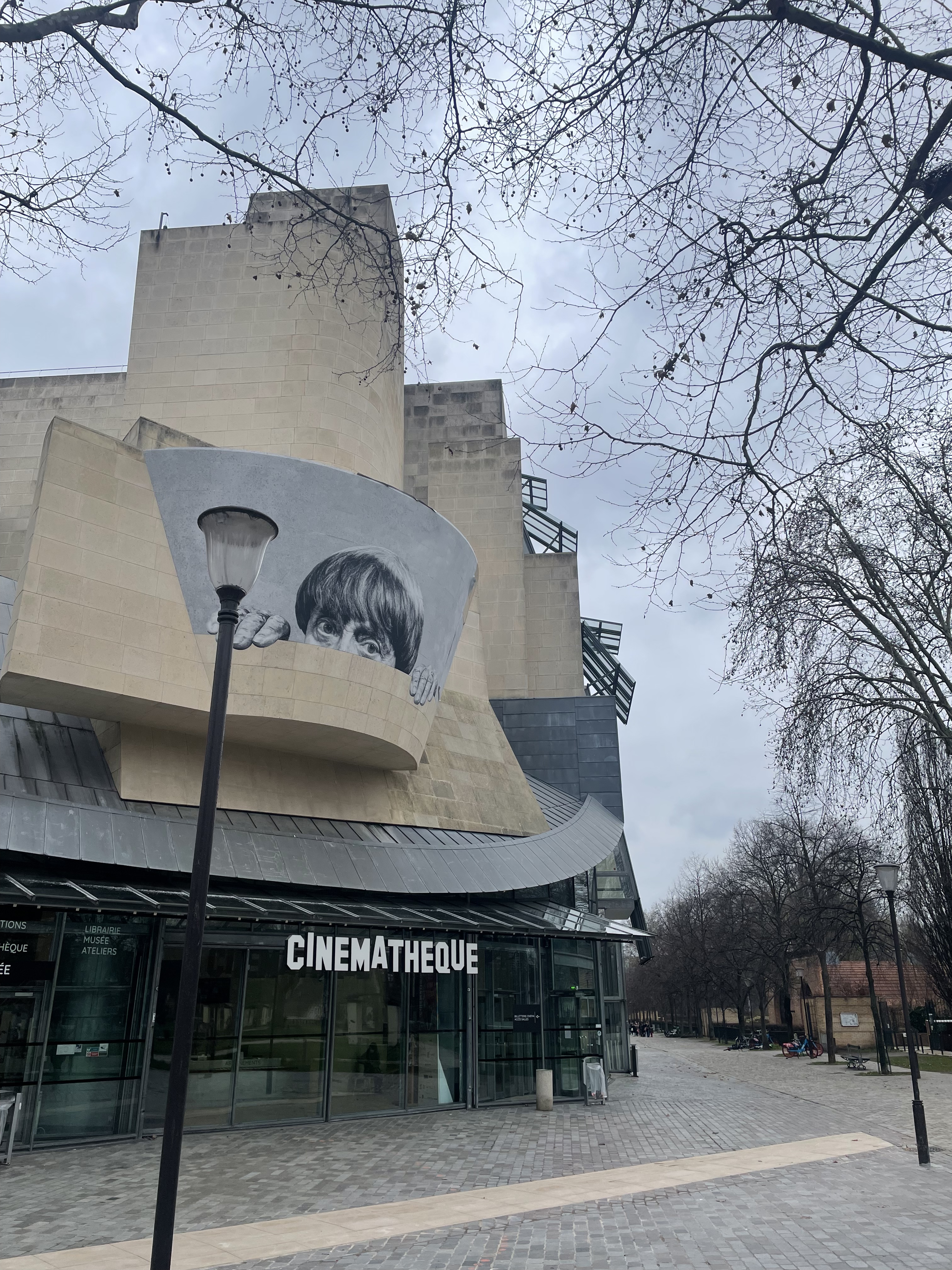
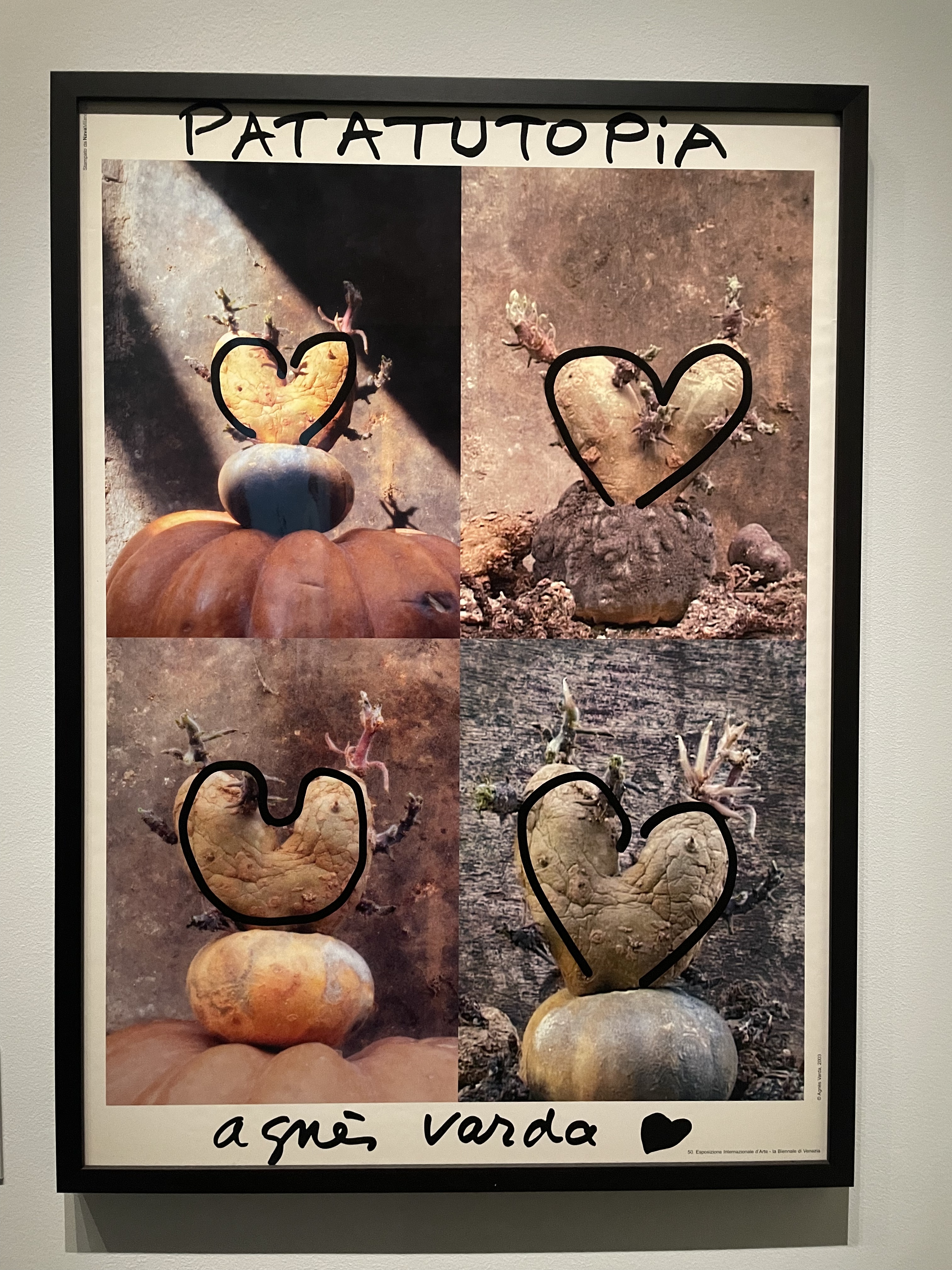
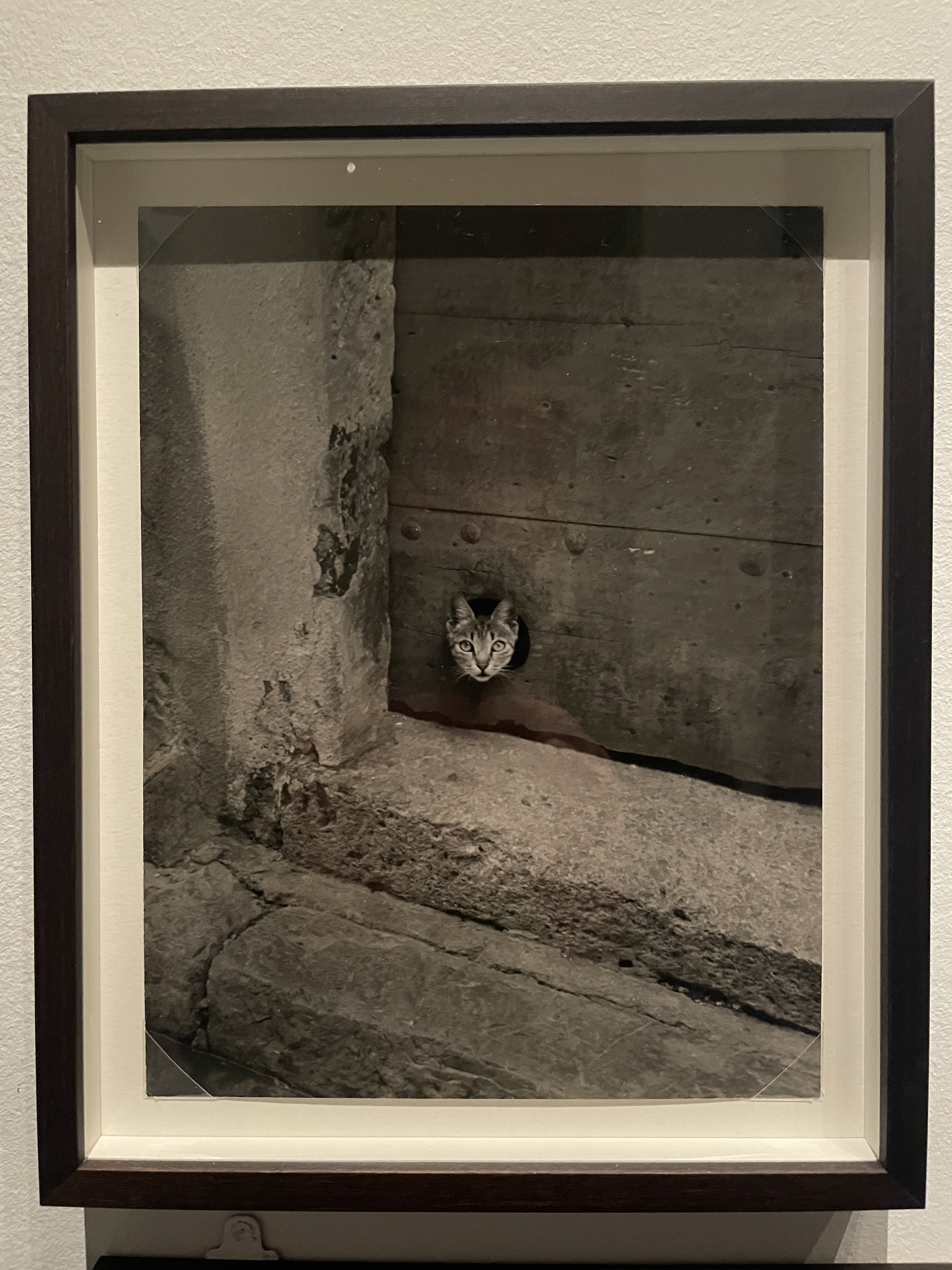
It’s a weird thing. As I wander about the neighborhood, sometimes I spot these older women with kind of a pageboy haircut, and in my head I’m like, Is it Agnes? I mean, of course I know it can’t possibly be, she died a few years ago, but even so, there’s this little spark of hope that she’s still kicking around the neighborhood.
A few days ago, the local district put up a new sign in the square I live on, highlighting the history of the Montparnasse neighborhood, “cosmopolitan and fraternal,” welcoming people of all nationalities and cultures, “mixing and working together in the cafes and workshops of the neighborhood.”
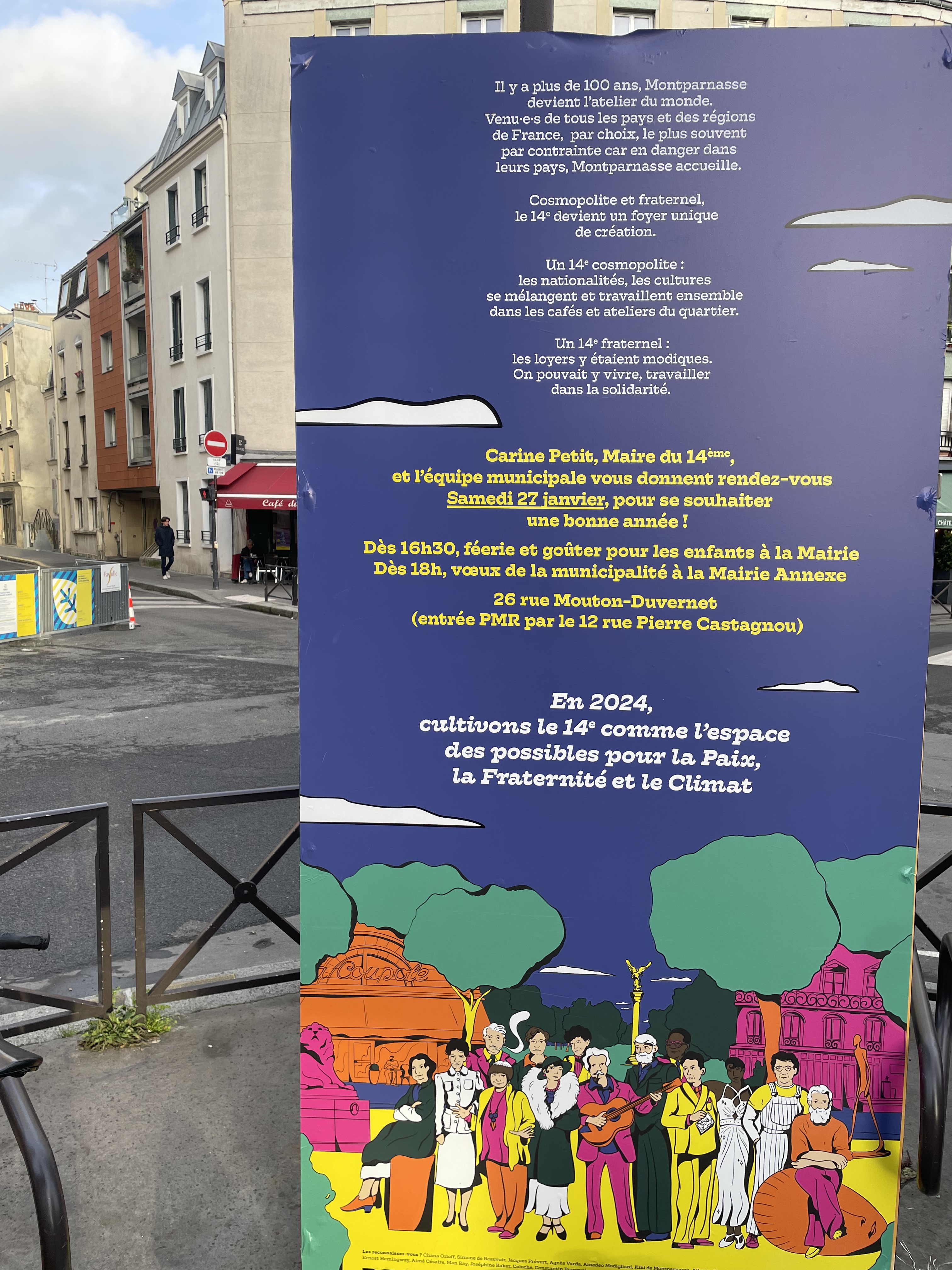
The people pictured at the bottom of the poster include some people you may have heard of — Agnes Varda, of course (yes, that’s her, fourth from the left), and also Ernest Hemingway, Pablo Picasso, Josephine Baker, Jean-Paul Sartre, Simone de Beauvoir, Amedeo Modigliani, Man Ray, Alberto Giacometti, Jean Cocteau.
And then a few days ago I went to the Petit Palais to see their exhibition on “Le Paris de la Modernité,” focusing on Paris’s transformation from 1905 to 1925.
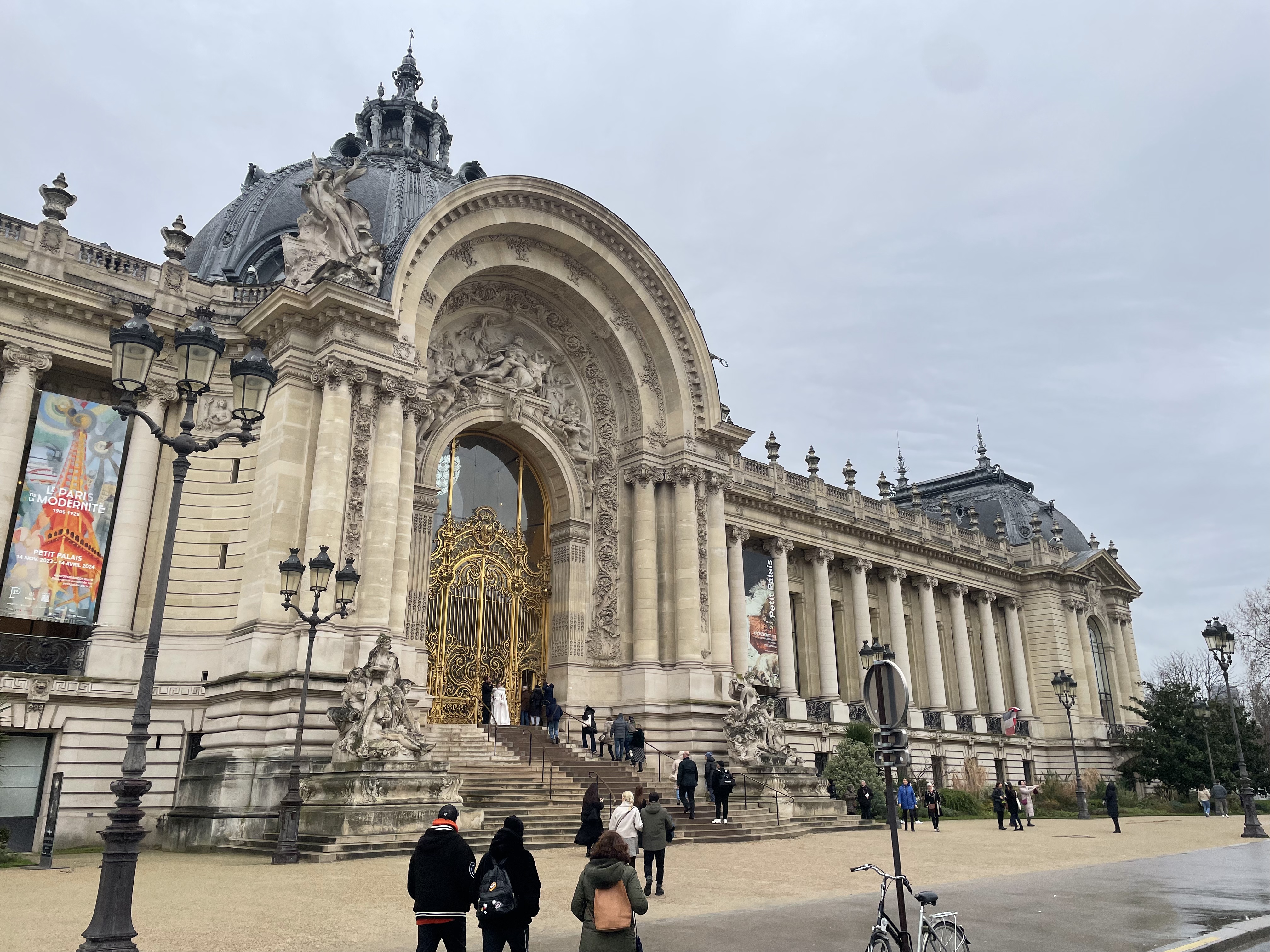
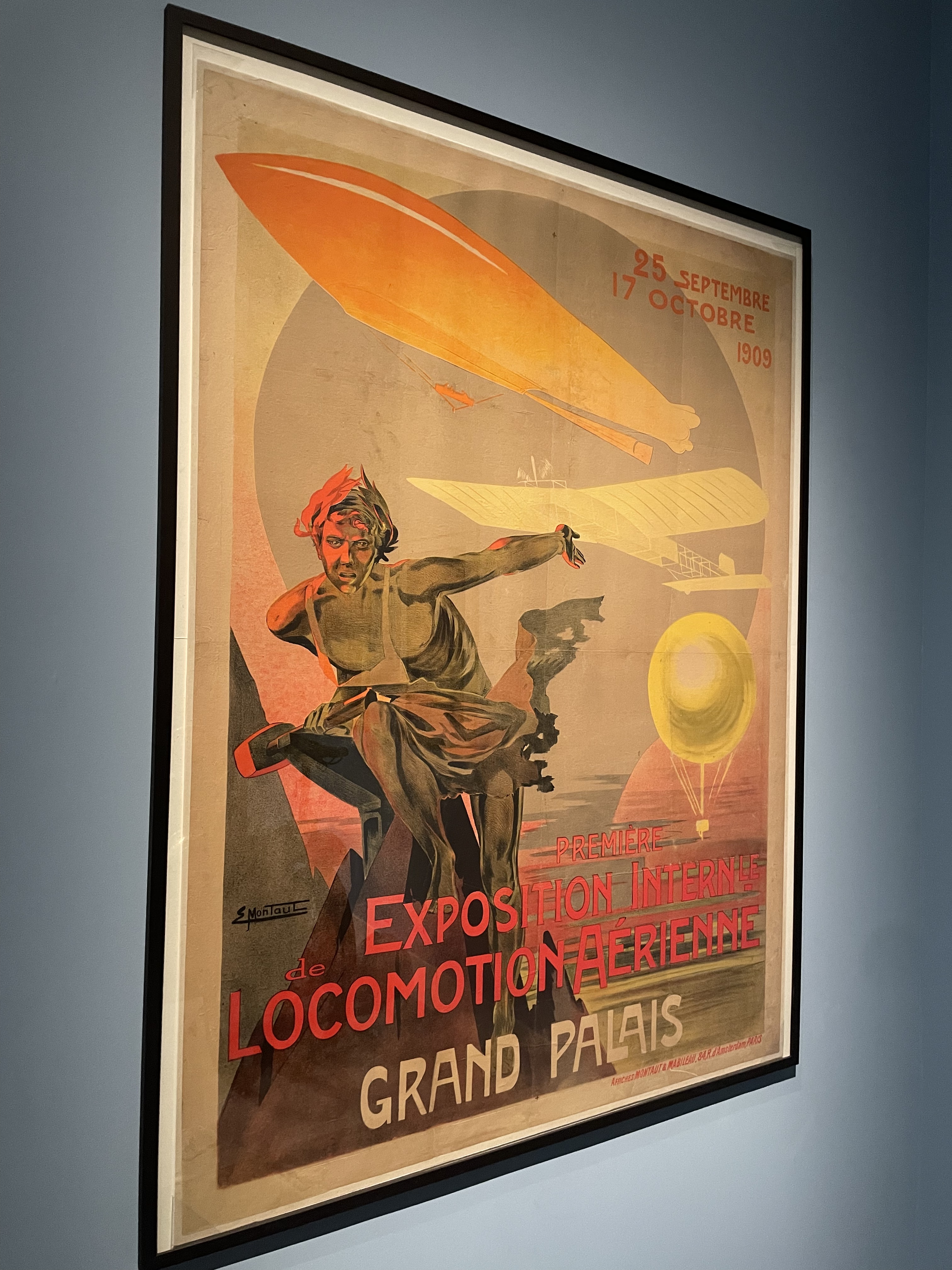
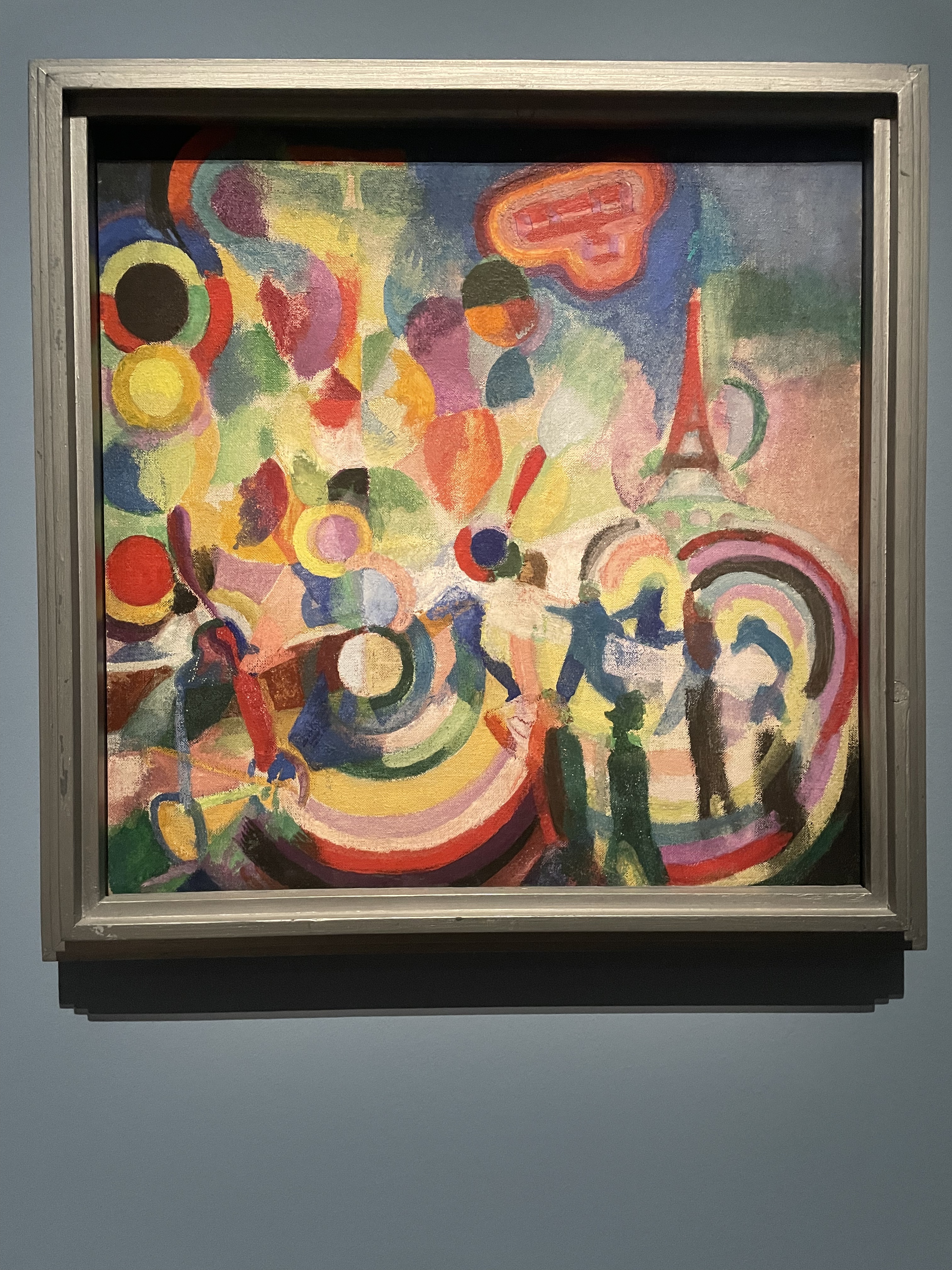
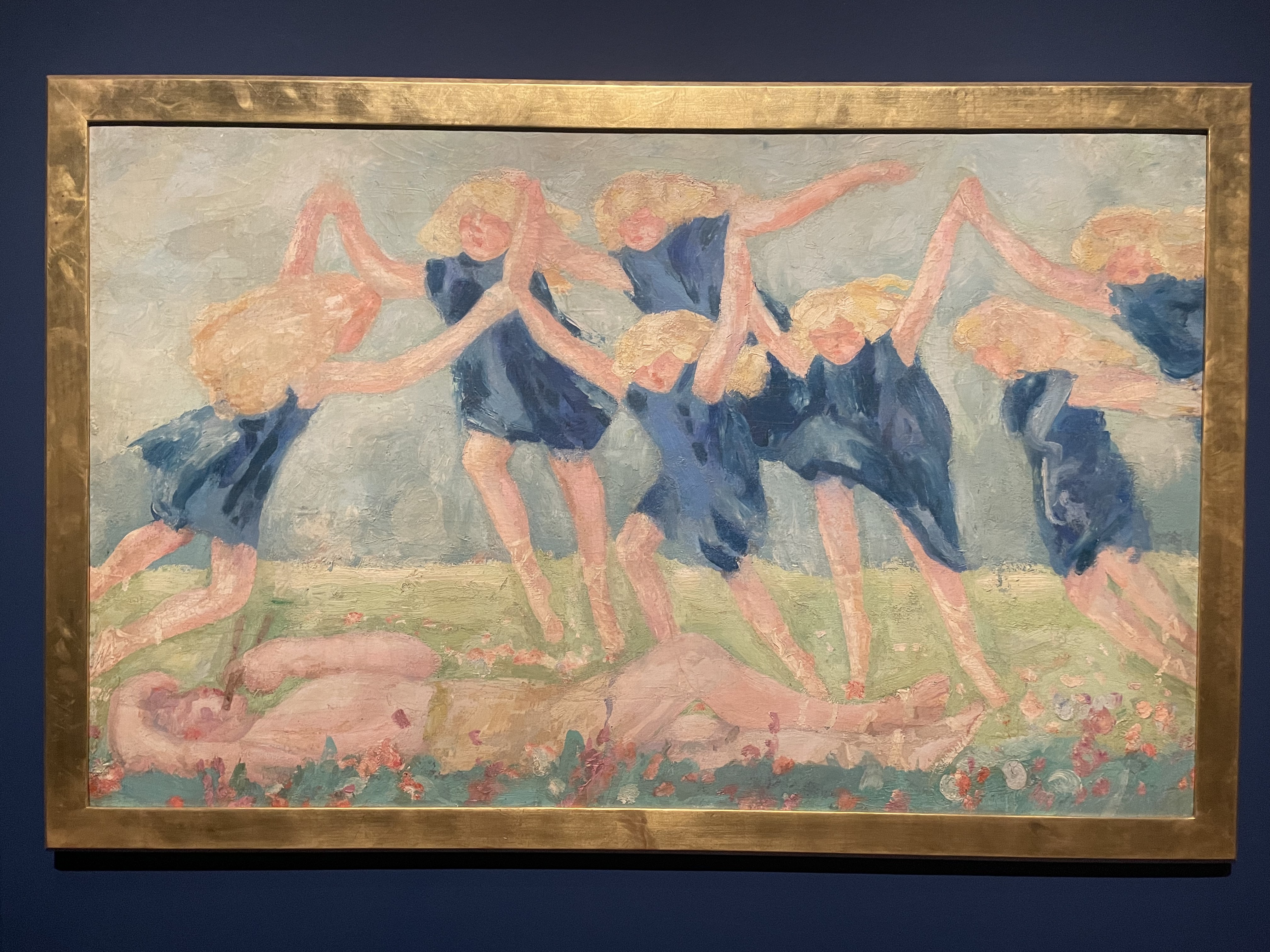
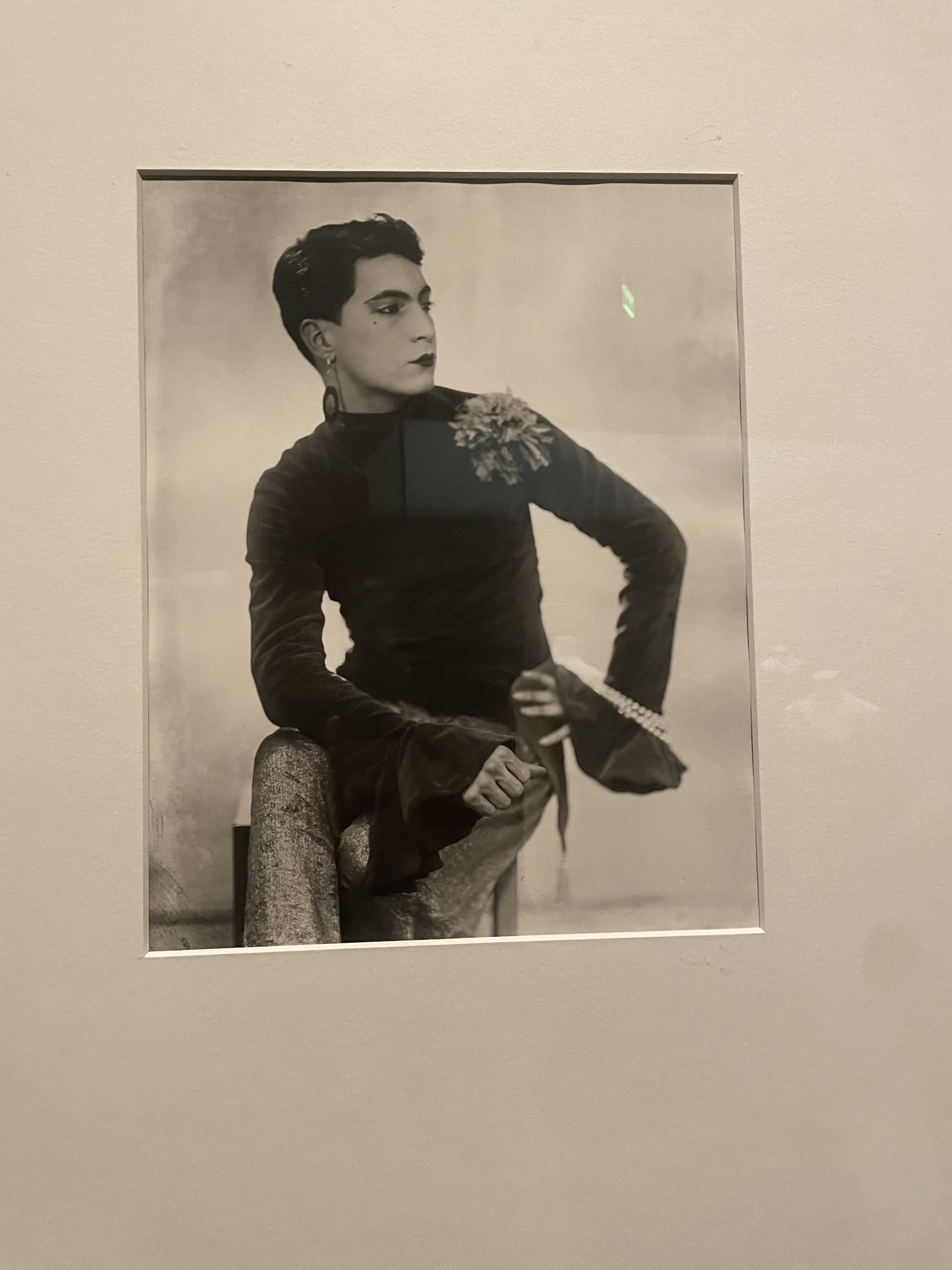

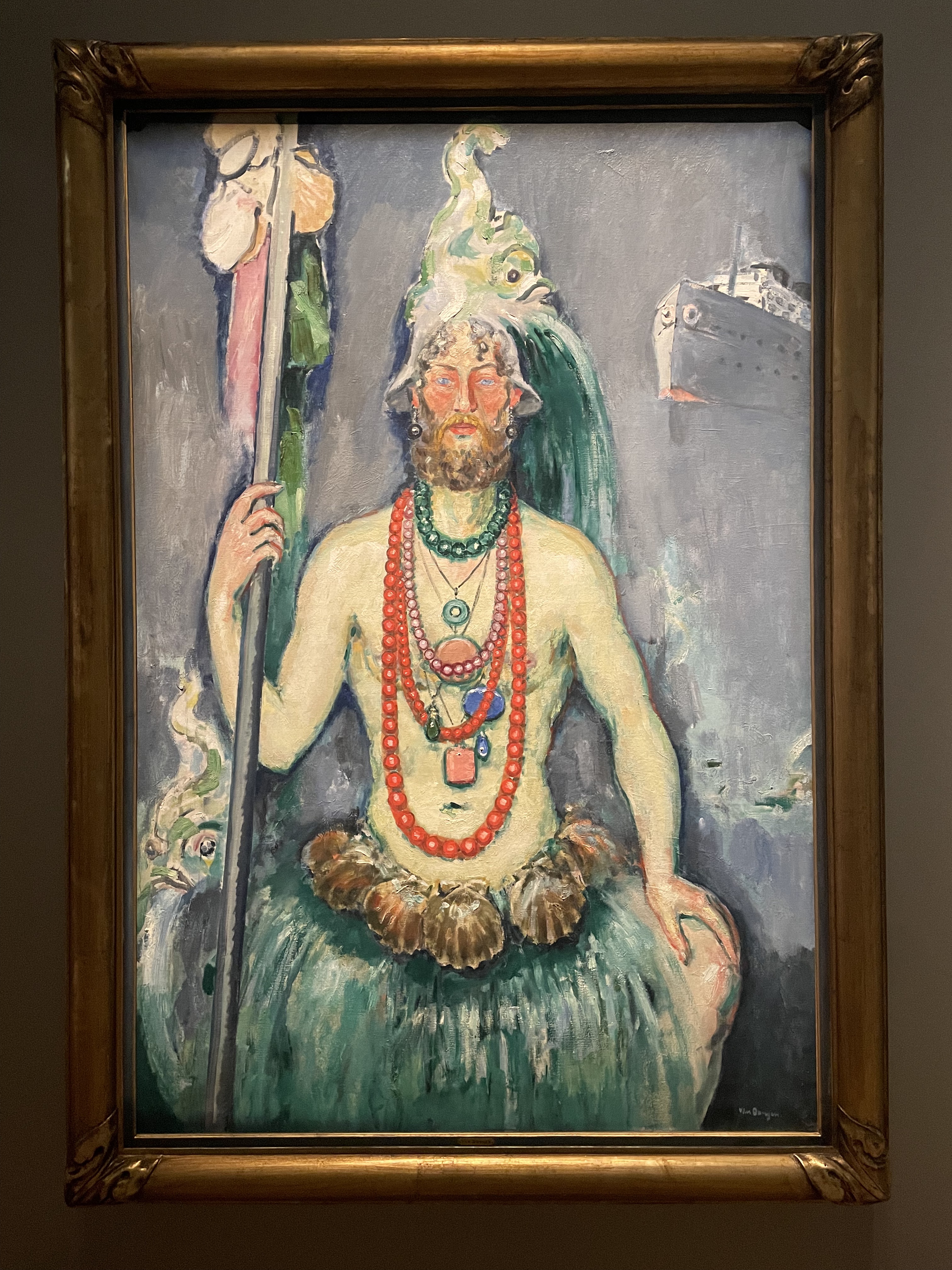
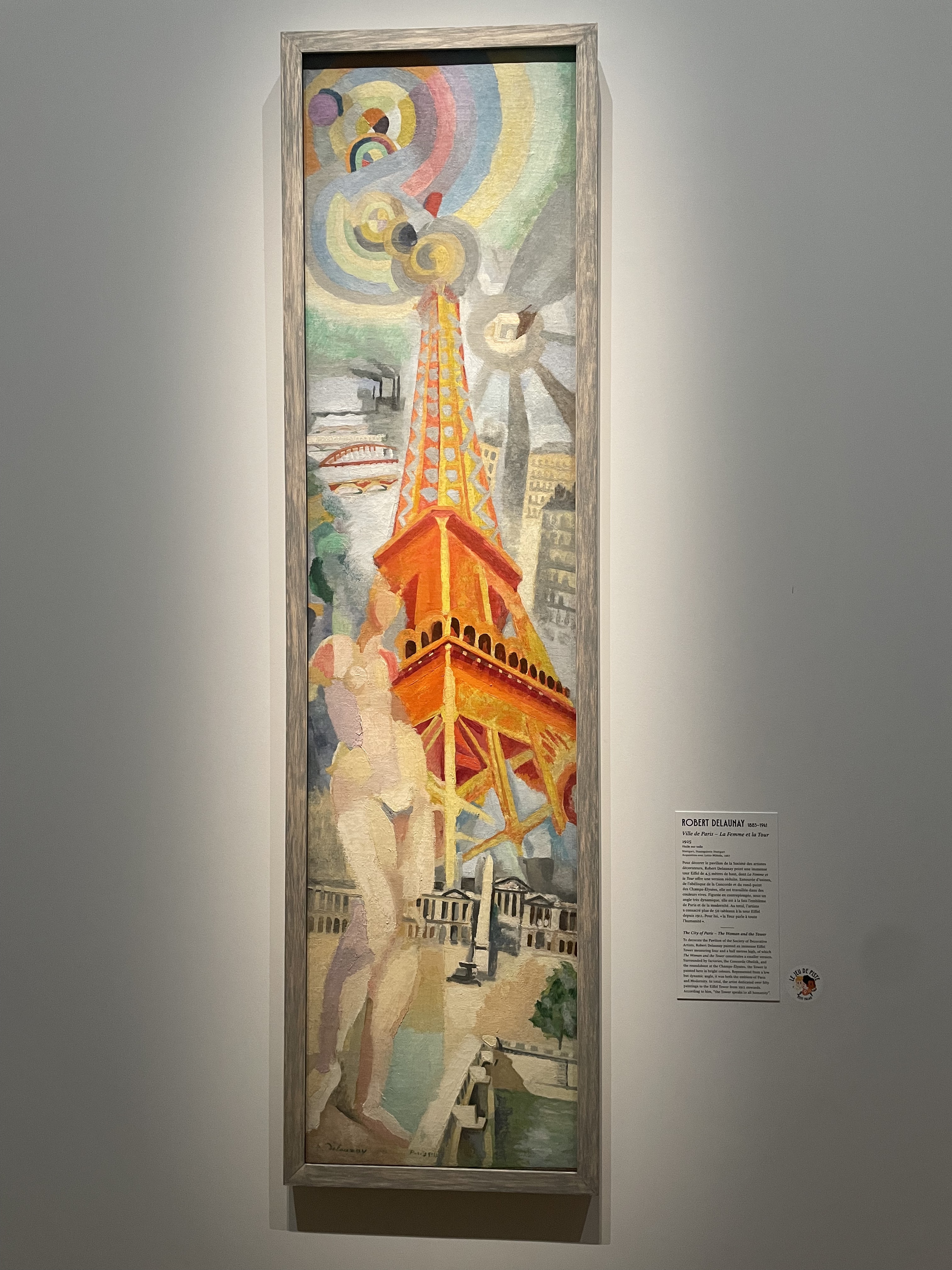
One aspect of that was that the artists who had set up shop in the Montmartre neighborhood at the north end of Paris found themselves the victims of their own success as rents rose and they were forced out. Right around the same time, a new Metro line opened, connecting Montmartre in the north with Montparnasse in the south, so many of the artists simply hopped the Metro and relocated to Montparnasse. And hence Montparnasse, hip and trendy neighborhood of artists, was born.


 A Simple Life in Paris